
Hearing often changes gradually with age. Conversations may become harder to follow, especially in restaurants, family gatherings, and other places with background noise. Higher-pitched voices may sound less clear, and the television volume may slowly increase.
Because these changes can develop over several years, an older adult may not notice the extent of the problem. Family members sometimes recognize it first.
A hearing test can determine whether hearing has changed, which sounds are difficult to detect, and whether medical treatment, hearing aids, or other communication strategies may help.
Common Signs of Hearing Loss After 65
Age-related hearing loss, also called presbycusis, usually develops gradually and affects both ears. It may make speech sound unclear even when it is loud enough to hear.
Consider scheduling a hearing evaluation if an older adult:
Frequently asks people to repeat themselves
Thinks other people are mumbling
Has trouble following group conversations
Struggles to understand speech in background noise
Turns the television or radio louder than others prefer
Has difficulty hearing on the telephone
Misses doorbells, alarms, or approaching vehicles
Finds children or higher-pitched voices difficult to understand
Avoids gatherings because conversation takes too much effort
Experiences ringing, buzzing, or other sounds in the ears
The National Institute on Aging’s hearing-loss guidance recommends seeking professional advice when signs of hearing loss appear.
When Should an Older Adult Schedule a Hearing Test?
There is no single testing schedule that is appropriate for every adult over 65. The U.S. Preventive Services Task Force has found insufficient evidence to determine the overall benefits and harms of routine hearing screening for older adults who have no symptoms.
That does not mean hearing concerns should be ignored. A test is appropriate when someone notices difficulty hearing, has risk factors, or experiences a change that affects communication or safety.
Testing may be especially useful after:
Repeated exposure to loud machinery, music, firearms, or workplace noise
Starting a medicine that may affect hearing
An ear infection or injury
A noticeable decline in understanding speech
Increasing problems with balance or communication
Family members raising consistent concerns
Difficulty hearing medical instructions, alarms, or traffic
A primary care professional may examine the ears and refer the patient to an audiologist or an ear, nose, and throat physician when necessary. An older adult may also be able to schedule directly with an audiologist, depending on the clinic and insurance requirements.
Sudden Hearing Loss Needs Prompt Medical Attention
Gradual age-related hearing loss is different from a sudden loss of hearing.
Hearing that disappears or becomes significantly worse in one or both ears over several hours or days should be treated as a medical emergency. The National Institute on Aging advises people experiencing sudden hearing loss to seek medical care immediately.
Do not assume a sudden change is simply earwax, congestion, or normal aging. Rapid evaluation can be important because some treatments are time-sensitive.
Prompt medical advice is also appropriate for hearing loss accompanied by severe dizziness, ear drainage, significant ear pain, a head injury, or new neurological symptoms.
What Happens During a Hearing Test?
A complete hearing evaluation is painless and commonly takes place in a quiet room or sound-treated booth. The exact process varies, but it usually includes several steps.
Health and Hearing History
The audiologist may ask about:
When the hearing change began
Whether one or both ears are affected
Ear infections, pain, pressure, or drainage
Tinnitus, dizziness, or balance problems
Previous noise exposure
Family history of hearing loss
Current medicines
Situations in which hearing is most difficult
Bring an updated medication list and note any symptoms that began after a new medicine or dosage change. Do not stop a prescribed medicine without guidance from the prescriber.
Examination of the Ears
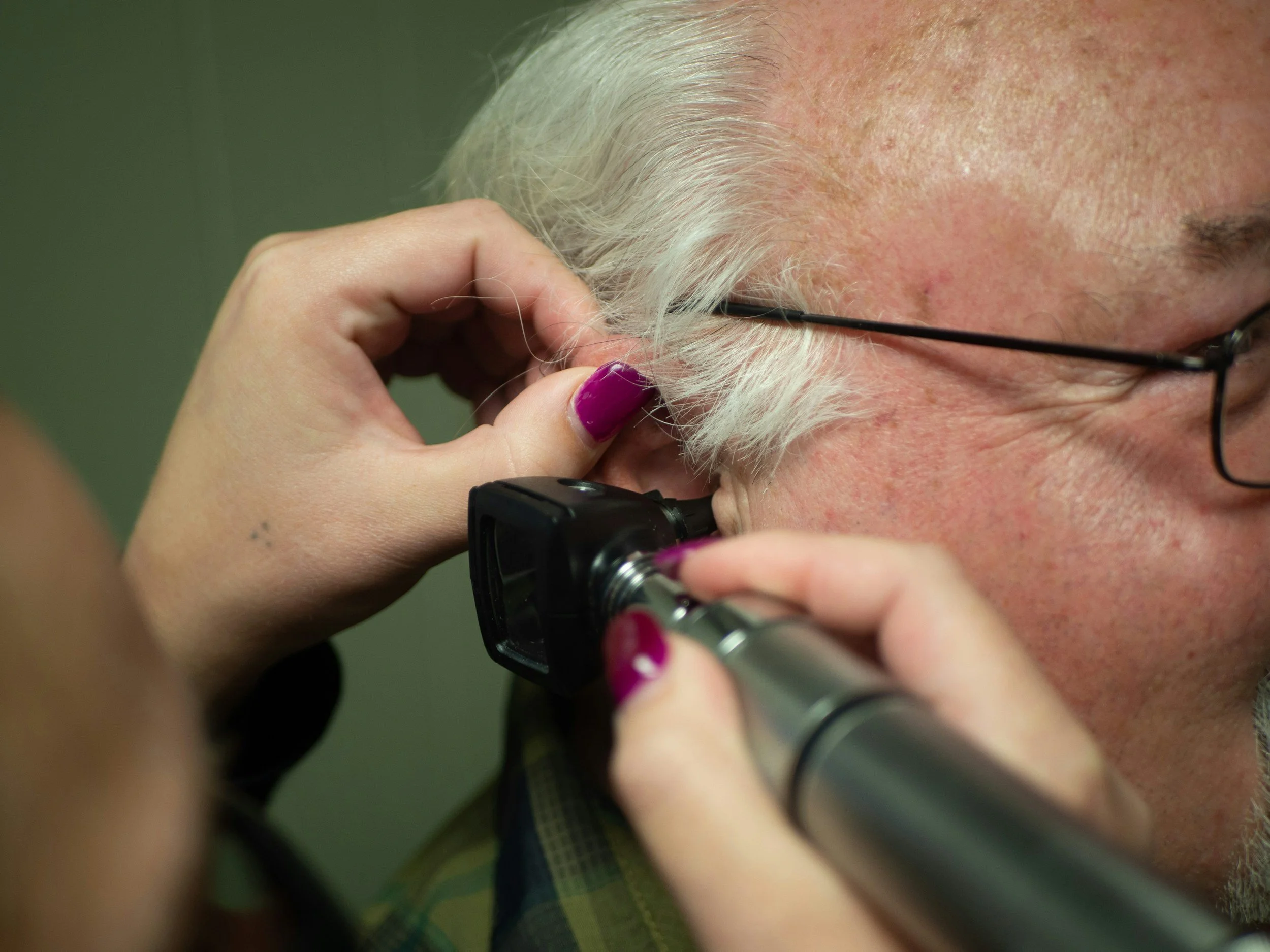
The provider may use a lighted instrument called an otoscope to look inside each ear. This can reveal earwax blockage, irritation, infection, or a visible problem with the eardrum.
Earwax can sometimes reduce hearing, but it should be removed using a method recommended by a healthcare professional. Placing cotton swabs or other objects inside the ear can push wax deeper or cause injury.
Pure-Tone Testing
During pure-tone testing, the patient wears headphones or small ear inserts and responds whenever a tone is heard. The tones vary in pitch and loudness.
The results are recorded on an audiogram. This chart shows the quietest sounds the person can hear at different frequencies in each ear.
Speech Testing
Speech testing evaluates how softly a person can detect speech and how clearly words can be understood. Some testing may include speech presented with background noise because real-life hearing difficulties are not always obvious in a completely quiet room.
Middle-Ear Testing
The audiologist may perform tympanometry, which checks how the eardrum responds to changes in air pressure. This can help identify fluid, eardrum problems, or other conditions affecting the middle ear.
Not every patient needs every test. The audiologist will choose the procedures that fit the symptoms and history.
Questions to Ask About the Results
Hearing-test results can involve unfamiliar terms and charts. Ask the provider to explain the findings in practical language.
Useful questions include:
Is the hearing loss mild, moderate, severe, or profound?
Does it affect one ear or both?
Which pitches are hardest to hear?
Is the problem likely related to the outer, middle, or inner ear?
Is a medical evaluation needed?
Could earwax, infection, or medication be contributing?
Would hearing aids or another device help?
What communication changes can help immediately?
When should hearing be tested again?
What changes should prompt an earlier appointment?
Request a copy of the audiogram and written recommendations for future comparison.
What May Happen After the Test?
The next step depends on the type and cause of the hearing loss. Options may include medical treatment, monitoring, prescription hearing aids, over-the-counter hearing aids, assistive listening devices, or communication training.
Over-the-counter hearing aids are intended for adults with perceived mild to moderate hearing loss. They are not appropriate for every hearing problem. Complex symptoms, sudden changes, significant differences between ears, pain, or drainage should be evaluated by a qualified professional.
The National Institute on Deafness and Other Communication Disorders provides an overview of age-related hearing loss and common treatment options.
Prepare for the Appointment
Before the hearing test:
Write down the situations in which hearing is most difficult.
Bring a medication list and relevant medical history.
Check insurance coverage and referral requirements.
Bring current hearing aids or other listening devices.
Consider asking a family member to attend.
Prepare questions about costs, follow-up care, and trial periods.
A family member can provide useful observations and help remember the recommendations. However, the older adult should remain involved in decisions about testing and treatment.
Do Not Wait Until Communication Becomes Impossible
Hearing loss can affect conversations, medical appointments, social participation, and awareness of alarms or other warnings. An evaluation does not commit anyone to purchasing a hearing aid. It provides information about current hearing ability and available choices.
When hearing changes are noticeable, testing offers a practical baseline and can identify problems that may be treatable. Sudden hearing loss or hearing changes accompanied by serious symptoms require prompt medical attention rather than a routine appointment.
This article provides general educational information and is not a substitute for individualized medical advice, diagnosis, or treatment.
