
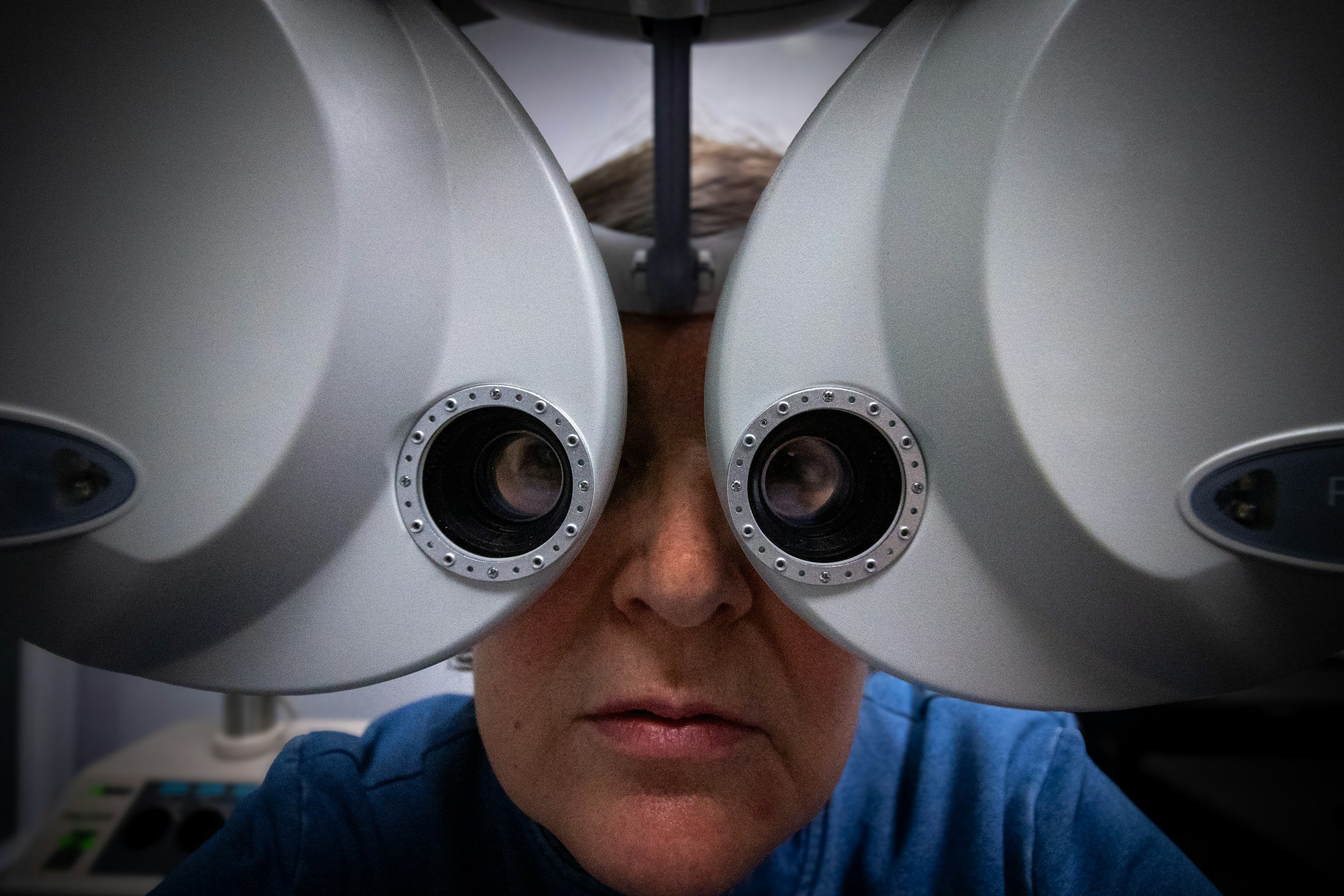
Vision commonly changes with age. Reading small print may become harder, adapting to darkness may take longer, and glare from headlights may become more noticeable. Some changes are expected, but others may be early signs of an eye condition that needs treatment.
Regular comprehensive eye exams are important because glaucoma, diabetic eye disease, age-related macular degeneration, and other conditions may cause little or no warning during their early stages.
Common Vision Changes With Age
Normal aging can affect several parts of vision. Older adults may notice:
Greater difficulty focusing on nearby objects
A need for brighter light when reading
Slower adjustment when moving between bright and dark areas
More glare from lamps or headlights
Reduced ability to distinguish similar colors
More difficulty seeing contrast, steps, or edges
Dryness, watering, burning, or a gritty sensation
Occasional floaters
These changes can affect driving, medication management, cooking, reading, and fall safety. They are worth discussing even when they develop gradually.
A new glasses prescription may help some problems, but it cannot identify every cause of changing vision. A comprehensive eye exam evaluates eye health as well as visual sharpness.
Know the Difference Between Aging and Eye Disease
Vision loss should not automatically be accepted as a normal part of aging. Several eye conditions become more common later in life.
Cataracts
A cataract clouds the eye’s natural lens. It may cause blurred vision, faded colors, glare, halos around lights, or difficulty driving at night. Cataracts often progress gradually and can usually be treated surgically when they interfere with daily activities.
Glaucoma
Glaucoma damages the optic nerve and may slowly reduce peripheral vision. The most common type often has no noticeable early symptoms, which is one reason routine eye exams matter.
Age-Related Macular Degeneration
Age-related macular degeneration affects central vision used for reading, recognizing faces, and seeing fine detail. Straight lines may appear wavy, or the center of vision may become blurred or distorted.
Diabetic Retinopathy
Diabetes can damage blood vessels in the retina. Early diabetic retinopathy may not produce symptoms, but a dilated eye exam can identify changes before substantial vision loss occurs.
Dry eye, eyelid problems, retinal conditions, medication effects, and neurological conditions can also change vision.
How Often Should Older Adults Get an Eye Exam?
The National Eye Institute recommends a dilated eye exam every one to two years for adults over 60. The American Academy of Ophthalmology also recommends a comprehensive medical eye evaluation every one to two years for adults 65 and older who have no symptoms or additional risk factors.
An eye doctor may recommend more frequent exams if you:
Have diabetes or high blood pressure
Have glaucoma, macular degeneration, or another diagnosed eye condition
Have a family history of eye disease
Take medication that can affect the eyes
Have had an eye injury or surgery
Wear contact lenses
Notice new or changing symptoms
Most people with diabetes or high blood pressure need a dilated exam at least annually, although the appropriate schedule should be determined by their healthcare and eye care professionals.
A quick vision screening or a test for new glasses is not always the same as a comprehensive dilated eye examination.
When Vision Changes Need Urgent Attention
Do not wait for a routine appointment when vision changes suddenly.
Seek immediate eye care or emergency evaluation for:
Sudden loss or severe blurring of vision
Many new floaters appearing at once
Flashes of light
A dark curtain, shadow, or missing area in the visual field
Severe eye pain
A painful red eye with nausea or vision changes
Sudden double vision
Eye trauma or chemical exposure
Sudden vision changes accompanied by weakness, numbness, facial drooping, confusion, or difficulty speaking
The National Eye Institute’s guidance on floaters warns that a sudden increase in floaters, flashes, or a curtain-like shadow can indicate a retinal tear or detachment. This can be a medical emergency.
What Happens During a Comprehensive Eye Exam?
The exact tests depend on your symptoms and medical history. A comprehensive exam may include:
Visual acuity testing for near and distance vision
Review of current glasses or contact lenses
Evaluation of eye movements and alignment
Peripheral vision testing
Measurement of pressure inside the eyes
Examination of the front of the eye
Dilated examination of the retina and optic nerve
Additional imaging or testing when indicated
Dilating drops temporarily widen the pupils. Vision may remain blurry or sensitive to light for several hours. Bring sunglasses and ask whether you should arrange transportation, especially if you have not been dilated before or do not feel comfortable driving afterward.
What to Tell the Eye Doctor
Provide a complete picture rather than mentioning only that your glasses seem weak.
Describe:
When the change began
Whether it affects one eye or both
Whether it is constant or comes and goes
Problems with reading, driving, stairs, or recognizing faces
Flashes, floaters, glare, halos, distortion, or blind spots
Eye pain, itching, dryness, or watering
Falls or near-falls related to poor vision
Previous eye injuries or procedures
Bring a current medication list, including over-the-counter products and supplements. Mention diabetes, high blood pressure, autoimmune conditions, stroke history, and other health issues that may affect vision.
Family history also matters. Tell the doctor about close relatives with glaucoma, macular degeneration, retinal detachment, or significant unexplained vision loss.
Questions to Ask During the Exam
A written list can make the appointment more useful. Consider asking:
Are these changes expected with age, or could they indicate an eye condition?
Has my prescription changed?
Are there signs of cataracts, glaucoma, macular degeneration, or retinal disease?
Do I need additional imaging or visual field testing?
How often should I have a comprehensive dilated exam?
Could any of my medications affect my eyes or vision?
Would brighter lighting, magnification, or another low-vision aid help?
Is it still safe for me to drive during the day and at night?
Which symptoms should prompt an urgent call?
What can I do to protect my remaining vision?
If treatment is recommended, ask about the goal, alternatives, risks, costs, expected recovery, and what may happen without treatment.
Make Everyday Tasks Easier
Small changes at home can improve comfort and safety:
Add bright, even lighting near stairs and work areas.
Reduce glare on televisions and computer screens.
Use contrasting colors on stair edges and frequently used controls.
Increase text size on phones and computers.
Keep eyeglasses clean and use the correct pair for the task.
Place frequently used items in consistent locations.
Wear sunglasses that block ultraviolet radiation outdoors.
Use magnification when recommended.
Update lighting and home safety measures promptly if vision changes begin affecting balance or navigation.
Protect Vision Between Appointments
Manage diabetes, blood pressure, and other health conditions with appropriate medical care. Avoid smoking, wear eye protection during hazardous work, stay physically active as your health allows, and follow prescribed eye-treatment instructions.
Do not stop eye drops or other medication because symptoms improve. Some eye diseases require continued treatment even when vision seems unchanged.
Routine examinations and prompt attention to new symptoms can help preserve vision and independence. Age may change how the eyes work, but unexplained vision loss should always be evaluated rather than dismissed.
This article provides general educational information and is not a substitute for individualized eye or medical care. Contact a qualified eye care professional about symptoms, examination schedules, and treatment decisions.
